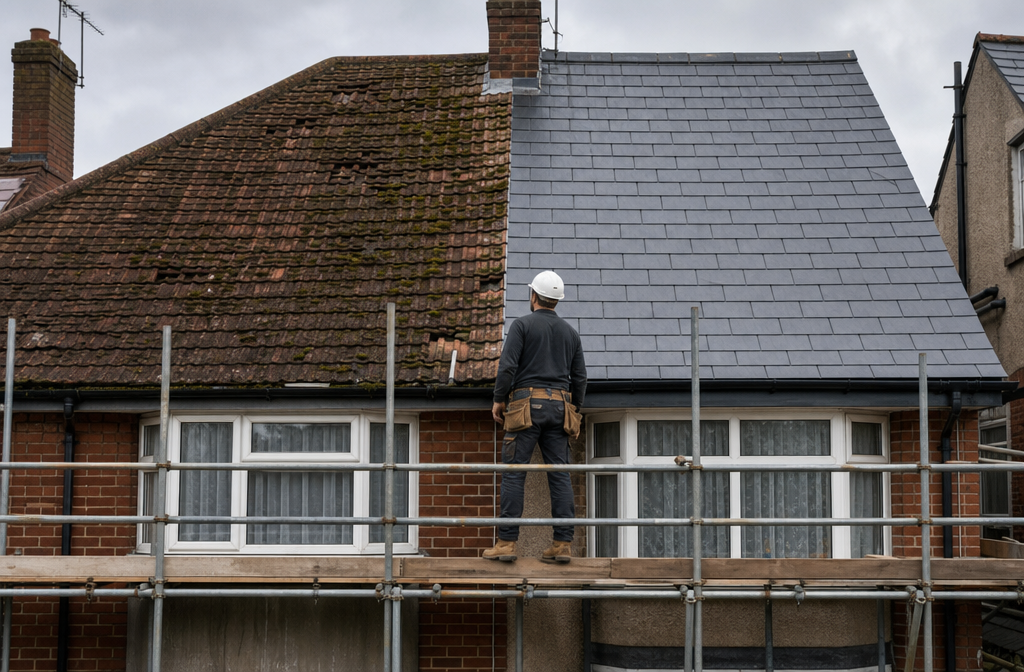
Quick Answer: As a general UK rule, if your roof is over 25 years old or the repair quote exceeds 30% of the cost of a full replacement, replacing the entire roof is the smarter financial decision. Repeated patching racks up scaffolding costs that can match a full replacement price within five years. For most homeowners weighing Roof Repair vs. Replacement UK, the maths tips toward replacement sooner than expected.
Key Takeaways
- Roofs under 25 years old with isolated damage are usually good candidates for repair; roofs over 35 years with multiple defects generally warrant full replacement [1]
- A full roof replacement for a standard 3–4 bedroom UK home costs roughly £7,500–£18,000 in 2026 [1]
- Minor repairs cost £150–£500; major repairs £800–£1,500 — but scaffolding hire alone runs £800–£1,500 per visit
- The 30% Rule: if a repair quote exceeds 30% of a new roof’s cost, replacement is usually more cost-effective [2]
- Natural slate lasts 100+ years; concrete tiles 40–50 years; felt flat roofs just 15–20 years [1]
- Three or more leaks within two years signals systemic roof failure — not bad luck [1]
- UK Building Regulations Part L requires insulation upgrades if more than 25% of the roof surface is replaced
- Home insurance may not cover damage on a poorly maintained or ageing roof [5]
- A new roof can meaningfully increase resale value and buyer appeal [5]
When Should I Repair vs. Replace My Roof?
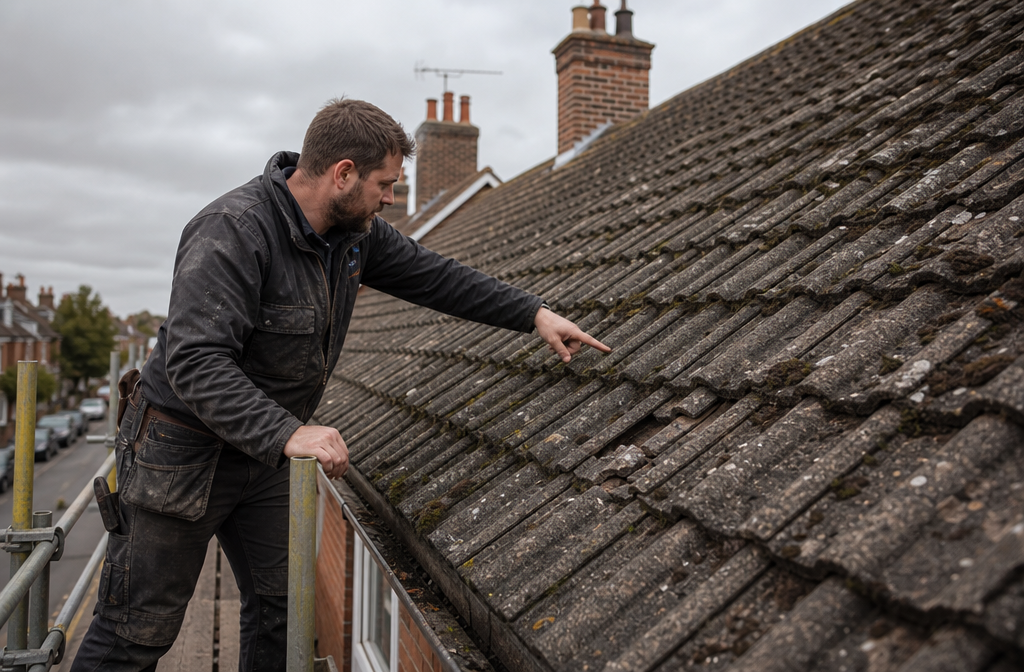
The decision hinges on three factors: the roof’s age, the extent of damage, and the cost of repair relative to full replacement. A roof under 25 years old with one or two slipped tiles is a clear repair candidate. A roof over 35 years old with recurring leaks, failing underlay, or widespread tile damage almost always makes more financial sense to replace outright [1][3].
The Age Factor
Different UK roofing materials have very different lifespans:
| Material | Expected Lifespan |
|---|---|
| Natural slate | 100+ years |
| Clay tiles | ~80 years |
| Concrete tiles | 40–50 years |
| Felt flat roof | 15–20 years |
| GRP fibreglass flat roof | 25–30 years |
If a concrete tile roof is 45 years old, patching it is, frankly, a sticking plaster on a structural problem.
The 30% Financial Rule
If a repair quote is £2,000 and a full replacement costs £7,000, the repair looks cheap — until you factor in that the roof will need another repair in two years, plus scaffolding each time. When any single repair exceeds 30% of replacement cost, replacement wins on a 10-year horizon [2].
The Underlay Problem
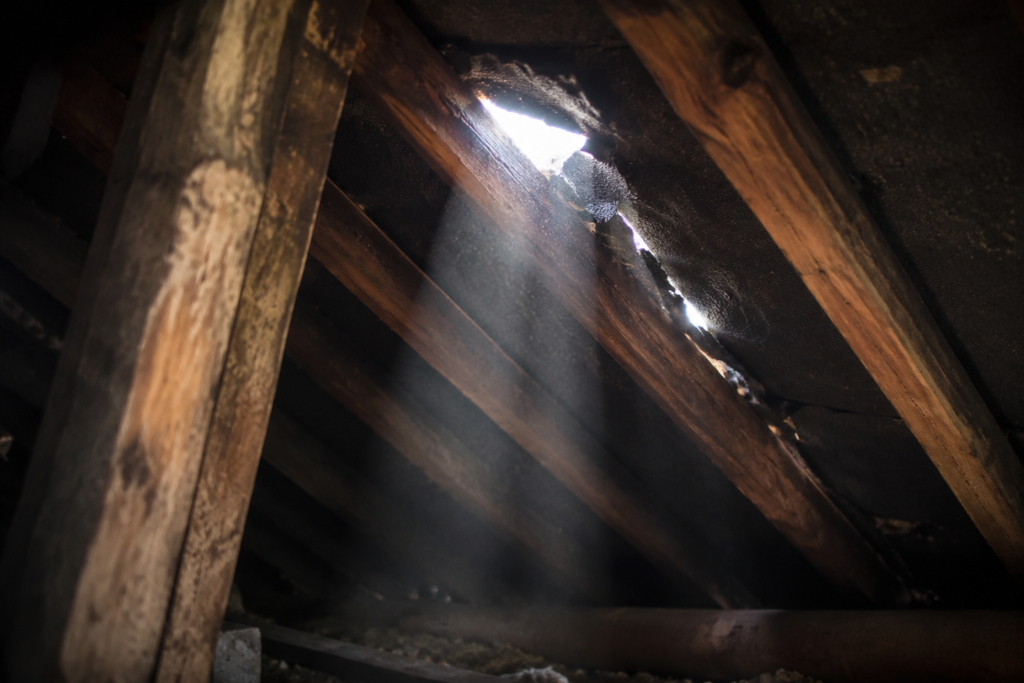
UK roofs built in the 1970s and 1980s typically used bitumen felt underlay, which perishes over time. You cannot patch rotten underlay — the tiles must come off entirely. If daylight is visible through the underlay on a dry day, a full replacement is the only real fix [1].
How Much Does a New Roof Cost in the UK?
A full roof replacement for a standard 3–4 bedroom UK home costs between £7,500 and £18,000 in 2026, depending on size, material, and location [1]. Slate roofs sit at the higher end; concrete tile replacements are more affordable. Use a Roof Replacement Cost Calculator to get an instant estimate for your specific property.
Cost Comparison: Patching vs. Replacing in 2026
| Scenario | Average UK Cost (2026) | Lifespan Added | Long-Term Value |
|---|---|---|---|
| Minor patch (5–10 slipped tiles) | £150–£300 | 1–3 years | High (if roof is sound) |
| Major repair (valley + repointing) | £800–£1,500 | 5–10 years | Medium |
| Repeated patching (3 visits + scaffolding) | £2,500–£4,000 | Variable | Very low |
| Full replacement (3-bed semi) | £7,500–£18,000 | 40–60+ years | Excellent |
For tile-specific pricing, the Tile Roof Cost Calculator and Slate Roof Cost Calculator give material-specific breakdowns. For flat roofs, try the Flat Roof Cost Calculator.
What Are Signs My Roof Needs Total Replacement?
Five physical symptoms point clearly toward replacement rather than repair [1][4]:
- Daylight in the loft — If you can see light through the underlay on a dry day, the felt has completely failed. No patch fixes this.
- Sagging roofline — A dip or bow in the roofline indicates structural timber damage (purlins or rafters). This is beyond cosmetic repair.
- Spalling tiles — Tile faces flaking off due to UK freeze-thaw cycles mean the material itself has degraded.
- Granule loss in gutters — Common with flat roofs and asphalt surfaces; signals the waterproofing layer is breaking down.
- Neighbours replacing theirs — On UK terraced and semi-detached estates, roofs were built at the same time. If the street is getting new roofs, yours is likely at the same end of its life.
Can I Patch a Leaking Roof or Do I Need Full Replacement?
A single isolated leak — one slipped tile, a cracked flashing around a chimney — is almost always patchable, and cost-effectively so [2]. The problem arises when leaks keep coming back in different spots. Three or more leaks within a two-year period is a strong signal that the roof system has failed, not just individual tiles [1]. At that point, patching treats symptoms while the underlying structure continues to deteriorate.
The Disturbance Problem: Every time a roofer walks on an old, brittle UK roof to fix one spot, they risk cracking two more tiles. On a roof over 40 years old, this disturbance cost is real and compounds quickly.
Choose repair if: The roof is under 25 years old, the damage is isolated to one area, and the quote is under 30% of full replacement cost.
Choose replacement if: You’ve had three or more callouts in five years, the roof is over 35 years old, or the underlay has failed.
The Scaffolding Trap: The Hidden Cost of Repeated Repairs
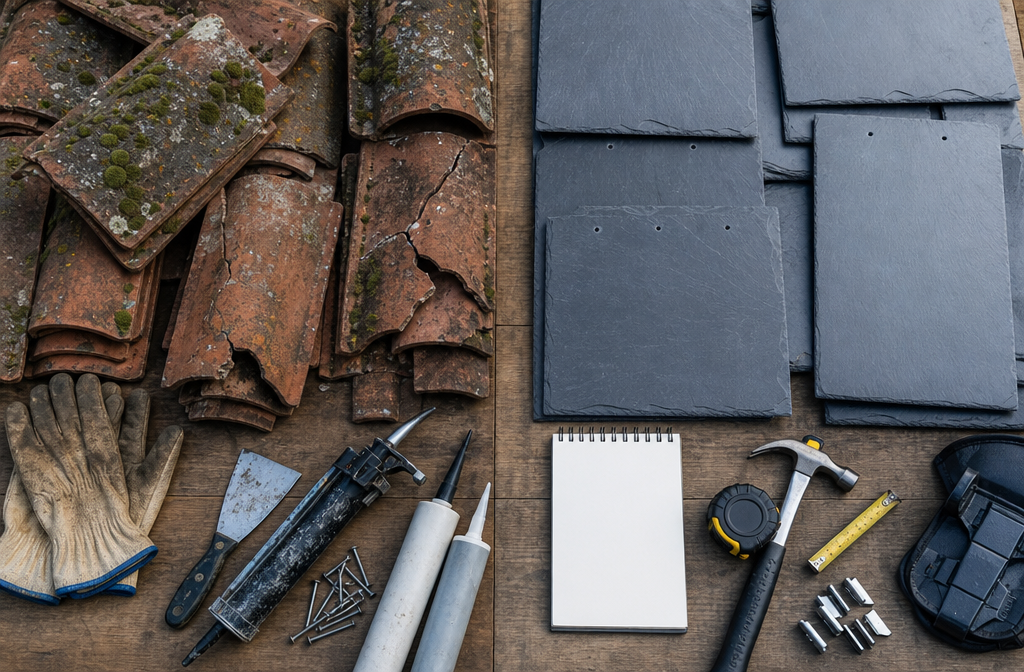
Scaffolding hire in the UK costs £800–£1,500 per elevation in 2026. This is the hidden cost that makes repeated patching so expensive. Two repair visits over five years — each requiring scaffolding — can cost £3,000–£4,000 in combined labour and access fees alone, before a single tile is replaced [2].
A full replacement uses that same scaffolding once, spread across a job that lasts 40–60 years. Doing everything in one visit eliminates redundant access costs entirely. If your repair quote is already creeping past £1,500, get a free roof repair cost estimate alongside a replacement quote before committing.
How Do Slate Roofs Compare to Tile Roofs for Longevity?
Natural slate significantly outlasts concrete or clay tiles in British weather conditions. Slate can last over 100 years with minimal maintenance; concrete tiles typically reach 40–50 years; clay tiles around 80 years [1]. In the wet, freeze-thaw conditions common across the UK, slate’s density and low water absorption give it a clear durability advantage. The higher upfront cost of slate — often £10,000–£18,000 for a standard home — is offset by its exceptional lifespan and low ongoing maintenance.
For a direct cost comparison, the Slate Roof Cost Calculator and Tile Roof Cost Calculator let you compare both options side by side.
Are There Government Grants for Roof Repairs in the UK?
Direct grants specifically for roof repair are limited, but several schemes can help offset costs. The Great British Insulation Scheme and ECO4 scheme may fund insulation improvements when a roof is being replaced, particularly for lower-income households or those in older, poorly insulated properties. Local councils sometimes offer discretionary grants for homeowners in fuel poverty. It’s worth contacting your local authority directly, as eligibility and funding vary significantly by region. Always check gov.uk for the most current scheme availability before budgeting.
What Roof Damage Will Insurance Cover?
Home insurance typically covers sudden, accidental damage — a storm blowing off tiles, a falling tree branch, or sudden structural failure [5]. What most policies do not cover is gradual deterioration, wear and tear, or damage resulting from a poorly maintained or ageing roof [5]. If an insurer’s assessor determines the roof was already in poor condition before the weather event, a claim can be rejected entirely. This makes proactive maintenance and timely replacement financially important, not just structurally.
Common mistakes homeowners make with roof repairs:
- Delaying repairs until damage spreads to the roof deck and timbers
- Accepting a verbal repair quote without checking whether scaffolding is included
- Patching over failing underlay without realising tiles must come off first
- Ignoring Part L regulations when replacing large sections (see below)
- Using DIY sealant products on structural leaks — these rarely hold through a UK winter
Is DIY Roof Repair Safe, or Should I Always Hire Professionals?
For most UK homeowners, DIY roof work is genuinely dangerous and rarely advisable [6]. Working at height without proper scaffolding or roof ladders is a leading cause of serious injury. Beyond safety, disturbing old tiles without experience often creates new leaks. Minor tasks — clearing gutters, applying flashing tape to a small crack from a ladder — can be done carefully. Anything involving climbing onto the roof surface, replacing tiles, or assessing structural timbers should be handled by a qualified roofer, ideally one registered with the National Federation of Roofing Contractors (NFRC).
2026 UK Building Regulations (Part L)
If a repair or replacement covers more than 25% of the roof’s total surface area, UK Building Regulations Part L legally requires the thermal insulation to be upgraded to current standards. This can turn what looks like a large repair into a project whose total cost approaches full replacement anyway. Homeowners sometimes discover this mid-project, which is why getting a professional assessment upfront — rather than authorising incremental repairs — saves money and avoids compliance surprises [6].
How Much Value Does a New Roof Add to My Home?
A new roof improves resale value and buyer confidence, particularly for homes over 30 years old where buyers and surveyors will flag roofing condition [5]. While exact uplift varies by property type and location, estate agents consistently note that a roof flagged in a survey report leads to price reductions or sales falling through. A replacement roof removes that risk entirely and can be marketed as a key selling point. Energy efficiency improvements that often accompany a new roof — better insulation, reduced heat loss — also contribute to a higher EPC rating, which increasingly matters to buyers [5].
What Roofing Materials Work Best in the Rainy UK Climate?
Natural slate and high-quality clay tiles are the most weather-resistant choices for the UK’s wet, variable climate. Both have low water absorption rates and handle freeze-thaw cycles well. Concrete tiles are more affordable but degrade faster under persistent moisture and frost. For flat roofs — common on extensions and garages — GRP fibreglass is now preferred over traditional felt because it’s seamless, durable, and handles standing water far better. EPDM rubber is another solid flat-roof option with a 25–30 year lifespan. Use the Flat Roof Cost Calculator to compare material costs for flat sections.
Roof Repair vs. Replacement UK: Interactive Decision Tool
🏠 Roof Repair vs. Replacement Tool
Answer 3 quick questions to get a recommendation.
FAQ: Roof Repair vs. Replacement UK
Q: How long does a roof repair take?
A minor repair — replacing a few tiles or resealing flashing — typically takes half a day to a full day. A major repair involving valley replacement or widespread repointing can take 2–3 days.
Q: Do I need planning permission to replace my roof in the UK?
Most like-for-like roof replacements fall under permitted development and don’t require planning permission. Exceptions include listed buildings, conservation areas, or if you’re changing the roof’s shape or height.
Q: What is the 30% rule for roof replacement?
If a repair quote exceeds 30% of the total cost of a full replacement, replacing the roof is generally the more cost-effective long-term decision, because the remaining roof is likely to fail soon anyway [2].
Q: Can a roofer repair just one section of a roof?
Yes, partial repairs are common and legitimate for isolated damage. The risk is that on an older roof, disturbing one area can crack adjacent tiles, and the repaired section may outlast the surrounding material by only a few years.
Q: How do I find a trustworthy roofer in the UK?
Look for contractors registered with the National Federation of Roofing Contractors (NFRC) or TrustMark. Always get at least three written quotes and confirm whether scaffolding costs are included.
Q: Does a new roof improve energy efficiency?
Yes. A properly insulated new roof reduces heat loss significantly, which can lower heating bills and improve your home’s EPC rating — both valuable in the current UK energy market [5].
Q: What’s the average lifespan of a UK roof?
It depends on material: natural slate lasts 100+ years, clay tiles around 80 years, concrete tiles 40–50 years, and felt flat roofs 15–20 years [1].
Q: Is roof replacement covered by home insurance?
Sudden storm or accidental damage is usually covered. Gradual wear, age-related deterioration, or poor maintenance is typically excluded [5].
Q: How do I get an accurate roof replacement quote?
Start with an online estimate using a Roof Replacement Cost Calculator, then get 2–3 in-person quotes from NFRC-registered roofers to compare.
Q: What happens if I ignore a leaking roof?
Water ingress damages roof timbers, insulation, ceilings, and internal walls. What starts as a £300 tile repair can become a £5,000+ structural repair if left for a season.
Conclusion: Is It Worth Patching Your Roof?
For most UK homeowners, the honest answer is: patch it once, maybe twice — but know when to stop. A roof under 25 years old with isolated damage is worth repairing. A roof over 35 years old with recurring leaks, failing underlay, or widespread tile deterioration will cost you more in repeated repairs and scaffolding than a full replacement would [1][2][4].
Actionable next steps:
- Check your roof’s age — find your home’s build date and identify the roofing material to estimate remaining lifespan
- Count your repair callouts — three or more in five years means the system has failed, not just individual tiles
- Apply the 30% rule — get a replacement quote alongside any repair quote over £1,000
- Check Part L compliance — if the job covers more than 25% of the roof, factor in insulation upgrade costs
- Get an instant estimate — use the free Roof Replacement Cost Calculator or Roof Repair Cost Calculator before speaking to any contractor
If you’re still unsure which route applies to your property, the Roof Cost Calculator contact page can help point you to the right tool for your situation.
References
[1] Is A New Roof Worth It In 2026 UK – https://www.bestbuilders.co.uk/guides/insights/is-a-new-roof-worth-it-in-2026-uk
[2] Roof Replacement Vs Repair Cost – https://howmuchdoesanewroofcost.co.uk/roof-replacement-vs-repair-cost
[3] Roofing Cost UK – https://www.bestbuilders.co.uk/costs/roofing-cost-uk
[4] Roof Repair Or Replacement Guide – https://estatesroofing.co.uk/news/roof-repair-or-replacement-guide/
[5] Repair Vs Replace – https://modernize.com/roof/repair-vs-replace
[6] Roof Repair Vs Replacement – https://generalroof.com/roof-repair-vs-replacement/